The Role of Boilers in Industrial Process Heating
Industrial Process Heating: The Role of Boilers
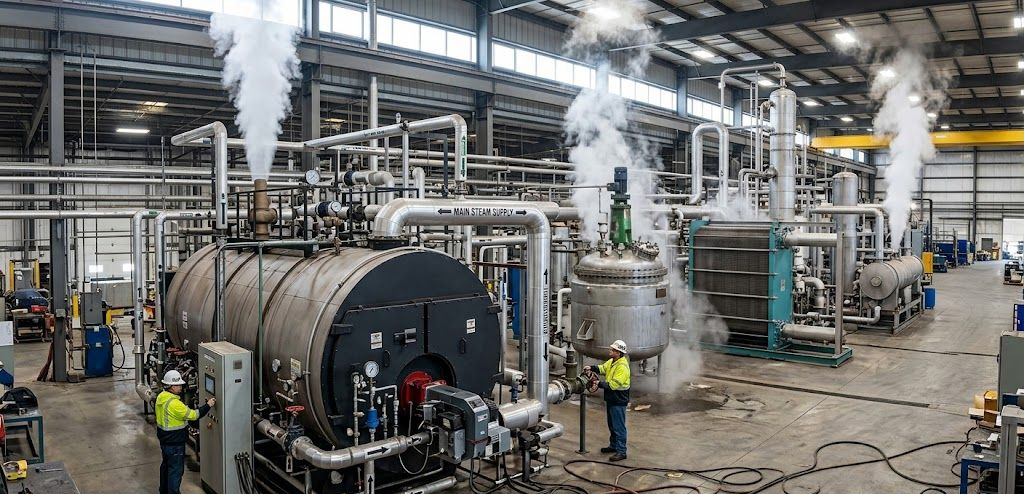
In industrial facilities, boilers do far more than heat buildings. They are mission-critical assets that drive
process heating, enabling manufacturing, sterilization, chemical reactions, food production, and countless other operations. When a boiler underperforms—or fails entirely—production slows, quality suffers, and downtime costs escalate quickly.
Across Texas, industries such as manufacturing, petrochemical processing, food and beverage production, and pharmaceuticals rely on boiler systems designed specifically for process heating demands. These systems must deliver precise temperatures, consistent pressure, and continuous operation under challenging conditions.
At
Houston Boiler Works, we design, install, and maintain industrial boiler systems that support process heating applications across the state. This article explains how boilers function in process heating, why they differ from comfort heating systems, and what facility managers need to know to keep operations running efficiently.
What Is Industrial Process Heating?
Industrial process heating refers to the use of controlled heat to support production, transformation, or treatment of materials. Unlike comfort heating—which is focused on maintaining indoor temperatures—process heating is integral to how products are made.
Common process heating applications include:
- Steam generation for manufacturing
- Chemical reactions requiring precise temperature control
- Sterilization and sanitation processes
- Drying, curing, or baking operations
- Distillation and separation processes
In many facilities, the boiler is the backbone of the entire operation, supplying heat or steam to multiple downstream systems.
How Boilers Support Process Heating Systems
Industrial boilers generate heat by burning fuel or using electricity to produce
hot water or steam, which is then distributed to process equipment through piping systems.
Key Boiler Outputs for Process Heating
- Low-pressure steam for heating and sanitation
- High-pressure steam for industrial processes and power generation
- Hot water for indirect heating and circulation systems
The boiler’s ability to deliver consistent output directly affects product quality, production speed, and system safety.
Process Heating vs. Comfort Heating: Key Differences
Understanding the distinction between comfort and process heating is essential when selecting or maintaining a boiler.
Comfort Heating Boilers
- Designed for variable seasonal demand
- Lower pressure and temperature requirements
- Intermittent operation
- Greater tolerance for short cycling
Process Heating Boilers
- Designed for continuous or near-continuous operation
- Higher pressures and tighter temperature tolerances
- Direct impact on production output
- Less tolerance for downtime or fluctuation
Using a boiler designed for comfort heating in a process application often leads to inefficiency, accelerated wear, and premature failure.
Industries That Depend on Process Heating Boilers in Texas
Texas’s industrial economy relies heavily on process heating systems powered by boilers.
Manufacturing and Fabrication
Boilers supply steam or hot water for forming, molding, and finishing operations. Inconsistent heat can result in defective products or slowed production.
Food and Beverage Processing
Steam is used for cooking, pasteurization, sanitation, and cleaning. Temperature precision is critical for food safety and regulatory compliance.
Petrochemical and Energy Facilities
High-pressure steam supports distillation, cracking, and heat transfer processes. Reliability is essential due to safety and production risks.
Pharmaceutical and Healthcare Manufacturing
Boilers support sterilization, cleanroom humidity control, and precise thermal processes required for product integrity.
Pulp, Paper, and Packaging
Steam is used for drying, pressing, and material conditioning, where consistency affects strength and quality.
Why Boiler Reliability Is Critical in Process Heating
In process heating environments, boiler downtime can have cascading effects far beyond loss of heat.
Consequences of Boiler Failure
- Production line shutdowns
- Spoiled or incomplete product batches
- Equipment damage from rapid temperature changes
- Safety risks from uncontrolled pressure loss
- Missed delivery deadlines and contract penalties
For many Texas facilities, a single hour of downtime can cost tens of thousands of dollars—or more.
Key Design Considerations for Process Heating Boilers
Not all boilers are suitable for industrial process heating. Proper design and selection are essential.
Load Calculation and Capacity
Process boilers must be sized based on:
- Peak and continuous demand
- Redundancy requirements
- Startup and recovery times
Undersized boilers limit production, while oversized systems waste fuel and short cycle.
Pressure and Temperature Requirements
Process heating often requires:
- Higher operating pressures
- Tight temperature control
- Stable output under fluctuating loads
Boilers must be engineered to meet these specifications consistently.
Fuel Type Selection
Common fuel options include:
- Natural gas
- Dual-fuel systems
- Electric boilers (in select applications)
Fuel availability, cost, and emissions requirements all influence boiler selection.
Efficiency and Cost Control in Process Heating
Energy costs are a major operating expense in industrial facilities. Boiler efficiency plays a significant role in overall production costs.
Efficiency Factors That Matter
- Heat exchanger design
- Water quality and treatment
- Burner modulation and controls
- Insulation and heat loss prevention
Even small efficiency gains can result in substantial annual savings for high-demand process heating systems.
The Impact of Water Quality on Process Heating Boilers
Process heating boilers are particularly sensitive to water quality issues.
Common Water-Related Problems
- Scale buildup reducing heat transfer
- Corrosion damaging pressure vessels
- Sludge restricting flow
- Oxygen infiltration weakening metal surfaces
Poor water quality reduces efficiency, increases maintenance costs, and shortens boiler lifespan. In Texas, hard water makes proper treatment essential for process heating applications.
Maintenance Requirements for Process Heating Boilers
Because process boilers operate under higher stress, they require
more disciplined maintenance than comfort heating systems.
Best Practices Include
- Regular combustion analysis
- Water quality monitoring
- Heat exchanger inspections
- Control calibration
- Preventive replacement of wear components
Proactive maintenance reduces unplanned outages and protects production schedules.
Redundancy and Backup Planning
Many industrial facilities incorporate redundancy into process heating systems.
Common Redundancy Strategies
- Multiple boilers staged together
- Smaller lead/lag configurations
- Emergency boiler rental plans
Redundancy ensures that a single failure does not halt production entirely.
Case Example: Process Heating Support for a Texas Manufacturing Facility
A manufacturing plant in Southeast Texas relied on a single boiler to support critical forming processes. Frequent temperature fluctuations were causing production defects and delays.
Houston Boiler Works evaluated the system and implemented:
- A properly sized replacement boiler
- Improved burner modulation
- Enhanced water treatment
The result:
- Stable process temperatures
- Reduced scrap rates
- Improved production consistency
- Lower fuel usage
Selecting the Right Boiler Partner for Process Heating
Industrial process heating requires more than basic boiler service. Contractors must understand:
- Industrial load profiles
- Safety and compliance requirements
- Process integration
- Redundancy planning
Houston Boiler Works specializes in industrial boiler systems designed to support process heating across Texas.
FAQ: Commercial Boiler Short Cycling
Are process heating boilers different from standard commercial boilers?
Yes. They are designed for higher duty cycles, tighter controls, and more demanding operating conditions.
Can existing boilers be upgraded for process heating?
In some cases, yes. However, many systems require replacement or significant modification to meet process demands.
How often should process boilers be inspected?
Most process heating boilers benefit from quarterly inspections and continuous monitoring.
Do process boilers require special permits?
Yes. Higher pressures and industrial use often require additional permitting and inspection.
Power Your Process Heating Systems with Confidence
Industrial process heating demands precision, reliability, and efficiency. Boilers play a central role in keeping Texas facilities productive, compliant, and profitable. Houston Boiler Works delivers expert design, installation, maintenance, and support for process heating boilers statewide.
Call (713) 213-8103 or request a consultation at https://www.houstonboilerworkstx.com/contact to discuss your industrial process heating needs.