Is It Time to Convert Your Commercial Boiler to a Different Fuel Source?
Energy markets continue to evolve, and with them, the way commercial and industrial facilities approach boiler operations. Rising utility costs, changing environmental regulations, sustainability initiatives, and the availability of newer technologies have prompted many organizations to evaluate whether their current boiler fuel is still the best choice.
For some facilities, a fuel conversion can significantly reduce operating expenses, improve efficiency, or enhance system flexibility. For others, the costs and operational implications may outweigh the potential benefits. Every facility is unique, which is why fuel conversion should always begin with a comprehensive assessment of the existing boiler system, utility infrastructure, operating requirements, and long-term business goals.
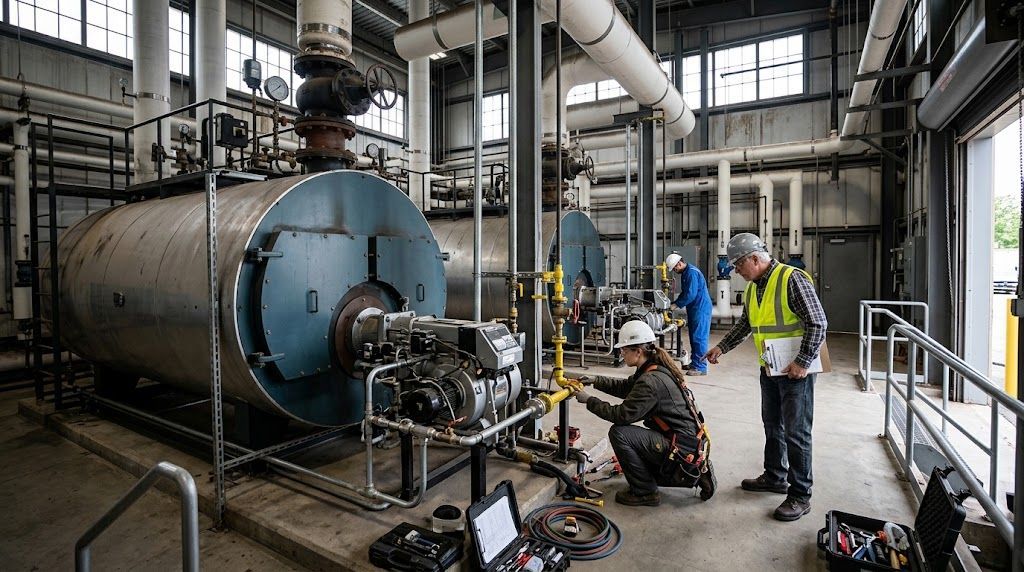
Commercial boiler fuel conversions are not simply a matter of changing burners. They often involve modifications to fuel delivery systems, combustion controls, permitting, safety systems, and overall plant operations. A carefully planned conversion can deliver decades of improved performance, while a poorly planned project can lead to reliability issues, unexpected costs, and regulatory challenges.
At Houston Boiler Works, we help commercial and industrial facilities throughout Texas evaluate boiler fuel options and determine whether a conversion makes financial and operational sense. This guide explores the reasons organizations consider fuel conversions, the available fuel options, and the critical factors that should be evaluated before moving forward.
Why Facilities Consider Fuel Conversion
Commercial boiler systems are designed to operate for decades, but fuel markets and operating conditions rarely remain the same over the life of the equipment.
Organizations commonly consider fuel conversion for several reasons, including:
- Reducing fuel costs
- Improving energy efficiency
- Meeting environmental goals
- Increasing fuel availability
- Improving operational flexibility
- Modernizing older equipment
- Reducing emissions
- Supporting facility expansion
In many cases, the decision is driven by long-term operating costs rather than the age of the boiler itself.
Understanding Common Commercial Boiler Fuel Sources
Commercial boilers operate using several different fuel types, each with advantages and disadvantages.
The most common options include:
Natural Gas
Natural gas remains the preferred fuel source for many commercial facilities because it offers:
- High combustion efficiency
- Lower emissions than many alternative fuels
- Reliable utility infrastructure in many regions
- Reduced maintenance requirements
- Clean combustion characteristics
Many Texas facilities have access to dependable natural gas supplies, making it one of the most economical options available.
Fuel Oil
Fuel oil continues to be used in certain industries and remote locations where natural gas service may be unavailable.
Advantages include:
- High energy density
- On-site fuel storage
- Reliable operation during utility interruptions
However, oil-fired systems often require:
- More maintenance
- Fuel storage management
- Additional emissions controls
- More frequent burner cleaning
Propane
Propane is commonly used where natural gas infrastructure is unavailable.
Benefits include:
- Clean combustion
- Flexible storage options
- Reliable fuel supply
Propane is often selected for facilities in rural areas or locations without natural gas service.
Dual-Fuel Systems
Many commercial facilities choose dual-fuel boilers capable of operating on both natural gas and fuel oil.
Advantages include:
- Increased operational flexibility
- Backup fuel during supply interruptions
- Greater resilience during peak utility demand
- Improved emergency preparedness
Hospitals, government facilities, and critical infrastructure often benefit from dual-fuel capabilities.
Reasons to Convert from Fuel Oil to Natural Gas
One of the most common conversion projects involves replacing fuel oil systems with natural gas.
Potential benefits include:
Lower Operating Costs
Natural gas prices are often more stable than fuel oil, although market conditions vary.
Many facilities realize meaningful long-term fuel savings.
Reduced Maintenance
Natural gas burns cleaner than fuel oil.
This typically results in:
- Less soot buildup
- Cleaner heat transfer surfaces
- Reduced burner maintenance
- Longer intervals between cleanings
Lower Emissions
Natural gas generally produces lower emissions than fuel oil, helping organizations meet environmental objectives and regulatory requirements.
Situations Where Fuel Oil Still Makes Sense
Although many organizations convert to natural gas, fuel oil continues to provide value in certain applications.
Examples include:
- Remote facilities
- Backup fuel systems
- Emergency preparedness
- Areas with limited gas infrastructure
For some operations, maintaining fuel oil capability provides important operational security.
Evaluating Existing Boiler Equipment
Not every boiler is a good candidate for fuel conversion.
Before planning a project, technicians evaluate:
- Boiler age
- Pressure vessel condition
- Burner compatibility
- Heat exchanger condition
- Control systems
- Remaining equipment life
If major structural issues exist, replacing the boiler may offer greater long-term value than converting fuels.
Burner Modifications
Fuel conversion often requires replacing or modifying the burner.
The burner must be compatible with the new fuel source while maintaining:
- Proper combustion
- Safe ignition
- Stable flame characteristics
- Efficient fuel usage
Modern burners also offer improved combustion controls compared to older equipment.
Utility Infrastructure Considerations
Fuel conversion extends beyond the boiler itself.
Facilities may need upgrades involving:
- Gas service
- Fuel piping
- Pressure regulation
- Electrical systems
- Ventilation
- Chimneys
- Fuel storage removal
These infrastructure requirements should be included in project planning and budgeting.
Environmental and Regulatory Considerations
Many organizations pursue fuel conversion as part of broader sustainability initiatives.
Potential environmental benefits include:
- Reduced greenhouse gas emissions
- Lower particulate emissions
- Improved air quality
- Reduced visible stack emissions
Facilities should also consider applicable permitting and inspection requirements before beginning a conversion project.
Safety Considerations
Changing fuel sources requires careful attention to safety.
Professional installation includes evaluation of:
- Fuel piping
- Leak detection
- Ventilation
- Combustion controls
- Emergency shutdown systems
- Pressure regulation
- Flame safeguard controls
Every component must operate safely under the new fuel configuration.
Operational Impacts During Conversion
Facility managers should understand how conversion affects daily operations.
Planning may include:
- Temporary boiler rentals
- Scheduled shutdowns
- Utility coordination
- Equipment commissioning
- Operator training
Careful scheduling minimizes operational disruption.
Calculating Return on Investment
Fuel conversion projects should always include a financial analysis.
Important considerations include:
Initial Project Cost
Including:
- Equipment
- Installation
- Utility upgrades
- Permits
- Engineering
- Commissioning
Fuel Savings
Estimate projected savings based on:
- Historical consumption
- Utility pricing
- Boiler efficiency
- Operating hours
Maintenance Savings
Modern combustion systems often reduce:
- Cleaning requirements
- Burner maintenance
- Emergency repairs
- Component wear
Equipment Longevity
Fuel conversion may extend the useful life of existing boilers when paired with burner and control upgrades.
Common Mistakes to Avoid
Facilities considering fuel conversion should avoid several common mistakes.
Focusing Only on Fuel Prices
Fuel costs fluctuate.
Long-term operational value depends on many factors beyond current market pricing.
Ignoring Infrastructure Costs
Utility upgrades may represent a significant portion of total project cost.
A complete evaluation prevents unexpected expenses.
Overlooking Boiler Condition
Converting an aging boiler with significant structural deterioration may not provide the expected return.
Skipping Combustion Testing
Proper burner setup is essential after conversion.
Professional combustion analysis ensures safe, efficient operation.
Case Study: Fuel Conversion at a Texas Food Processing Facility
A food processing company in Southeast Texas operated two aging fuel oil boilers that had become increasingly expensive to maintain.
Houston Boiler Works performed a detailed system assessment and determined that both pressure vessels remained structurally sound.
Rather than replacing the boilers, the facility completed a conversion to natural gas that included:
- New burners
- Updated combustion controls
- Gas utility upgrades
- Control system modernization
- Comprehensive commissioning
Following the project, the facility achieved:
- Lower annual fuel costs
- Cleaner combustion
- Reduced maintenance requirements
- Improved reliability
- Better emissions performance
The organization also gained greater confidence in long-term operating costs by reducing its dependence on fluctuating fuel oil markets.
Is Fuel Conversion Right for Every Facility?
Not necessarily.
Fuel conversion is most successful when it aligns with:
- Operational requirements
- Utility availability
- Equipment condition
- Budget
- Long-term business objectives
A professional assessment helps determine whether conversion, modernization, or complete replacement represents the best investment.
Frequently Asked Questions
Can any commercial boiler be converted to a different fuel?
Not always. Compatibility depends on the boiler design, burner configuration, age, and overall condition of the equipment.
Is natural gas always the least expensive option?
Fuel prices vary over time and by location. A lifecycle cost analysis provides a more accurate comparison than current fuel prices alone.
How long does a fuel conversion project take?
Project timelines vary depending on equipment modifications, permitting, utility work, and facility scheduling. Planning ahead helps minimize operational disruption.
Will fuel conversion improve efficiency?
Many facilities experience improved efficiency when modern burners, controls, and combustion systems are installed as part of the conversion.
Should an older boiler be converted or replaced?
The answer depends on the condition of the pressure vessel and supporting components. A professional evaluation helps determine which option provides the greatest long-term value.
Make Informed Decisions About Your Boiler's Future
Fuel conversion can be an effective way to improve efficiency, reduce operating costs, and modernize an existing boiler system—but only when it is carefully planned and professionally executed. Every facility has unique operational requirements, and the right solution depends on much more than current fuel prices.
Houston Boiler Works helps commercial and industrial facilities throughout Texas evaluate boiler fuel options, assess existing equipment, and develop practical solutions that support long-term reliability and efficiency. Whether you're exploring a conversion to natural gas, considering a dual-fuel system, or weighing modernization against replacement, our experienced team can provide the technical expertise needed to make confident, informed decisions that benefit your facility for years to come.